Context:
A recent review highlights how extracellular vesicles (EVs) including exosomes and microvesicles act as essential messengers between colorectal cancer (CRC) cells and their surrounding microenvironment.
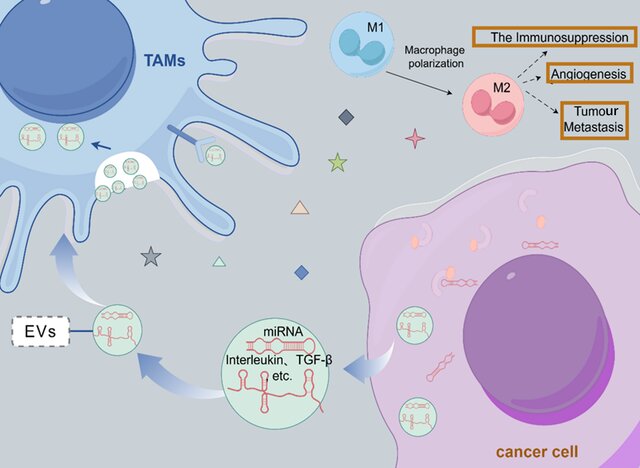
EVs transport miRNAs, proteins, lipids, and metabolic factors that regulate tumor growth, angiogenesis, immune evasion, EMT, and therapy resistance.
Importantly, the paper emphasizes how EV-mediated crosstalk shapes both pro-tumor and anti-tumor pathways within the tumor ecosystem.
Insight:
What I find particularly compelling is how EVs function as precision-level communication tools.
Instead of random secretion, CRC cells selectively package molecules that:
condition fibroblasts into cancer-associated phenotypes,
reprogram macrophages and neutrophils toward immunosuppressive states,
promote angiogenesis,
and even transfer chemoresistance traits to neighboring cells.
This selective packaging makes EVs not just biomarkers but active participants in disease progression.
Scientific Significance:
Understanding EV-mediated signaling opens new therapeutic possibilities:
Blocking EV release to slow tumor progression
Engineering EVs as drug or RNA delivery vehicles
Using EV cargo as early, minimally invasive biomarkers
As our knowledge expands, EVs may become central to designing more personalized and microenvironment-focused CRC therapies.
Source:
📄 The role of extracellular vesicles in the communication between colorectal cancer and its microenvironment
DOI:10.1007/s00432-025-06318-3