Exogenous Extracellular Vesicles as Emerging Platforms for Drug Delivery and Precision Therapy

Context
Conventional drug delivery systems often face critical limitations, including poor targeting efficiency, systemic toxicity, rapid clearance, and inability to cross biological barriers. In recent years, exogenous extracellular vesicles (EVs) have emerged as a promising solution to overcome these challenges.
Exogenous EVs are vesicles that are isolated, engineered, and administered intentionally, rather than being naturally released in vivo. Their cell-derived origin provides intrinsic biocompatibility, while their amenability to engineering allows precise control over cargo composition, surface properties, and tissue targeting.
This review highlights exogenous EVs as versatile nanoplatforms capable of integrating biological functionality with advanced therapeutic design, positioning them at the forefront of next-generation precision medicine.
Insight
What distinguishes exogenous EVs from synthetic nanocarriers is their unique combination of natural origin and engineering flexibility.
1. Biocompatibility and Immune Evasion
Due to their lipid bilayer structure and endogenous membrane proteins, exogenous EVs exhibit:
- low immunogenicity
- prolonged circulation time
- minimal recognition by the mononuclear phagocyte system
These features enable efficient systemic delivery while reducing inflammatory and immune-related side effects.
2. Versatile Cargo Loading Strategies
Exogenous EVs can be loaded with a wide range of therapeutic agents using both passive and active methods, including:
- chemotherapeutic drugs
- small interfering RNAs (siRNAs)
- microRNAs and antisense oligonucleotides
- proteins, peptides, and enzymes
- gene-editing components such as CRISPR/Cas systems
This versatility allows EVs to serve as multifunctional therapeutic carriers.
3. Targeted and Precision Delivery
Surface modification of EVs enables cell- and tissue-specific targeting through:
- ligand conjugation
- receptor-binding peptides
- antibody or aptamer display
Such targeting strategies significantly enhance therapeutic efficacy while minimizing off-target toxicity an essential requirement for precision therapy.
4. Ability to Cross Biological Barriers
One of the most compelling advantages of exogenous EVs is their capacity to cross physiological barriers, including:
- the blood–brain barrier
- epithelial and endothelial barriers
- dense tumor stroma
This property expands their applicability to neurological disorders, brain tumors, and otherwise inaccessible tissues.
5. Flexible Routes of Administration
Exogenous EVs can be administered via multiple routes, such as:
- intravenous injection
- intranasal delivery
- oral administration
- localized or topical application
This flexibility enables tailored therapeutic strategies based on disease type and anatomical location.
Scientific Significance
The review emphasizes several transformative implications of exogenous EV technology:
1. Cancer Therapy
Exogenous EVs allow targeted delivery of chemotherapeutic agents, RNA-based therapeutics, and immune modulators, resulting in:
- improved tumor specificity
- reduced systemic toxicity
- enhanced therapeutic index
2. Neurological and Neurodegenerative Diseases
Their ability to cross the blood–brain barrier makes EVs highly attractive for treating conditions such as:
- neurodegenerative disorders
- brain inflammation
- ischemic injury
3. Regenerative Medicine and Immunomodulation
Exogenous EVs can promote tissue repair, angiogenesis, and immune regulation without the risks associated with live cell transplantation, such as tumorigenicity or immune rejection.
4. Precision and Personalized Medicine
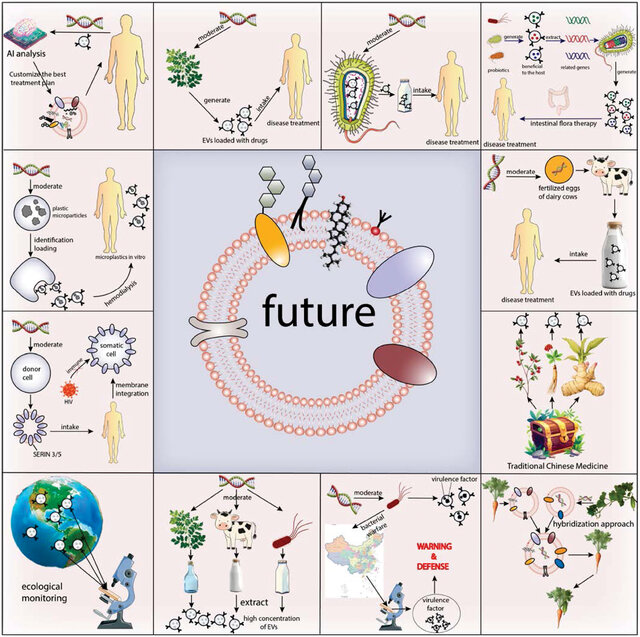
By engineering EVs according to disease-specific molecular signatures, exogenous EVs enable personalized therapeutic strategies that align with individual patient profiles.
Challenges and Future Perspectives
Despite their promise, several challenges remain:
- scalable and reproducible production
- standardized isolation and characterization methods
- cargo loading efficiency
- regulatory and safety considerations
Addressing these challenges will be critical for the clinical translation of exogenous EV-based therapies.
Conclusion
Exogenous extracellular vesicles represent a paradigm shift in drug delivery and therapeutic design. By combining biological compatibility with advanced engineering capabilities, they offer unprecedented opportunities to deliver precise, effective, and personalized treatments.
As production technologies and regulatory frameworks evolve, exogenous EVs are poised to become a central platform in future precision therapeutics.
Source
📄 Exogenous Extracellular Vesicles as Emerging Platforms in Translational Medicine